
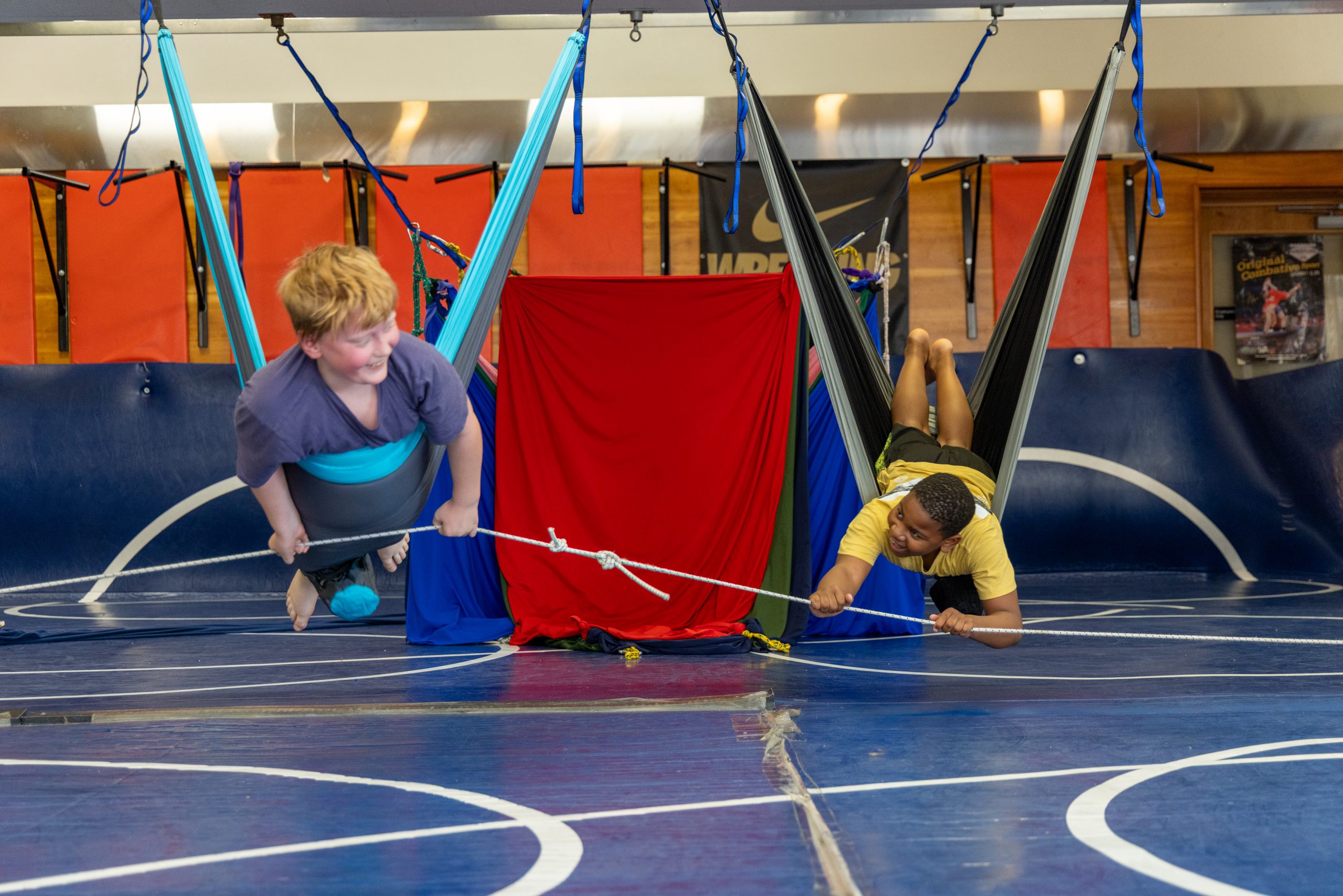
When I say sensory strategies, I’m not talking about groovy lights and water beads. Those things are cool and can be effective but let’s look at how we can incorporate larger, gross motor methods. Sensory input that can really make a difference when using a strategy. What I call the Big Three. Let’s start with the first one, vestibular input.
Vestibular input is specifically movement of the head. When we are using vestibular input as a strategy then I want to find a way to give rhythmic, and if possible, intensity to moving my kid’s head. Sounds weird when it’s stated like that but hear me out. When you get off a roller coaster or one of those spinney, pukey things at the fair, how do you feel? Some of us great, some of us horrible. Either way, you are more alert than you were before you got on, you are definitely present, and you probably know where your body is in space at that very moment. That was all due to your head getting moved around. A lot.
This is what using vestibular input as a sensory strategy means. It can help give the seekers what they are seeking, and if done through play and fun, can help the avoiders help integrate that system. In other words, it can help kids organize their brains, feel calmer, and improve focus and regulation. It’s not that simple of course, but it’s a start.
So having something like a swing can be extremely beneficial in this way. When someone is on a swing and feels that pull of gravity in different planes, it very much so activates the vestibular system. How do I know it works? Well, if someone feels better after swinging, it worked. If someone feels worse after swinging, it didn’t work. It’s one of those things where you don’t really know until you try. What you would be looking for after swinging is a change in behavior.
The type of swing can make a difference too as far as engagement but that’s a different topic for another blog.
Don’t have access to a swing? Ok, what else works? Scooters are a close second to the type of tool that provides vestibular input. It’s slightly different as the head does not travel in different planes as a swing promotes. But having a ramp can help with that. Don’t have a ramp, then it can still provide that intensity just by lying down on the stomach or back as the person’s head is horizontal as opposed to vertical. Depending on what other tools you may have around, you could pull that child around at a faster speed with the use of a rope or a bungee. Always wear a helmet when on a scooter by the way!
No scooter, no swing? No problem. Those two tools allow the equipment to do the work so there is not as much motor output from the child. The swing does all the work. So, in that same spirit, pulling a kid around on a bed sheet can be used in that same way. That’s a lot on the adult though. If you’re an OT, PT, or coach that could fall under the daily job description but as a parent that be a lot on the back. So then we work on log rolls, somersaults, head infinities, things like that also provide intense and rhythmic vestibular input. Remember, we are looking to get movement to the head.
Activating the vestibular sense throughout the day can help in a lot of ways. It is usually a way to “wake up” a kiddo or raise their alert level. Remember the rollercoaster scenario. Like it or hate it, you are definitely more alert when you get off the ride. This is one way we can utilize vestibular input as a sensory strategy. Not only are we waking up the body and brain, but we are also giving more body awareness, and it can be very calming to the nervous system. If we have a calm nervous system, our brains are more organized which usually leads to more focus and increased ability to regulate emotions. That being said, vestibular input can also bring a person’s alert level too high. This is completely possible so it’s something to consider and notice if you are using this as a strategy. This is where making it rhythmic can make a difference. Jumping on and off a trampoline can be great but if they do it sporadically then it might not be rhythmic. Think of what we all do to calm a baby. We rock it. Rhythmically. Obviously not at 100 miles an hour but it’s still a bit more intense because we usually are holding the baby on the horizontal plane.
If we are noticing a rise in alert level and behaviors are increasing after using something like a swing, an excellent tool to remember is always follow up with heavy work. Heavy work is using our muscles with moderate to severe intensity. Like carrying heavy boxes, lifting weights, or doing pushups. But again, heavy work is another blog for another day. Just keep that in mind when using vestibular input as a sensory strategy.
Interested in becoming a certified Sensory Fitness Coach or just learning more about using effective sensory strategies with kids? Register for a live event in your area or take the virtual training by following this link https://bit.ly/sfenroll26